

AI business guides
Where AI can actually help a small business
Start with work that involves reading, finding or drafting information. Then ask whether the result is easy to check and useful enough to justify the setup.
An employee opens a supplier email, reads the attachment, finds the order reference and writes a short summary for a colleague. None of it is especially difficult. It still takes attention, and it happens repeatedly.
That is a more useful starting point for AI than asking where you could add a chatbot.
Look for a specific piece of information work. Then ask what a good result looks like, who can check it and what happens if the result is wrong.
Start with reading and preparation
AI may help prepare a first pass through a document: proposed invoice fields, a summary of a customer conversation or a suggested category for an incoming request.
Keep the original beside the output. The person reviewing an extracted amount should be able to see where it came from. If a field is missing, the system should say so instead of filling it with a plausible guess.
A useful trial compares the time needed to review and correct the output with the time needed to do the task from scratch. If checking it takes just as long, the impressive demonstration may not help the daily job.
Give business questions a defined meaning
“How many orders did we process today?” sounds simple. Does processed mean received, paid, packed or dispatched? Which time zone defines today? Do cancelled orders count?
Settle those definitions before judging an AI answer. Otherwise two reasonable interpretations can produce different numbers.
For a question about delayed orders, show the records and the rule used to classify them. In an interface such as Vale AI, the useful part is the connection to business context and review, rather than the conversation box itself.
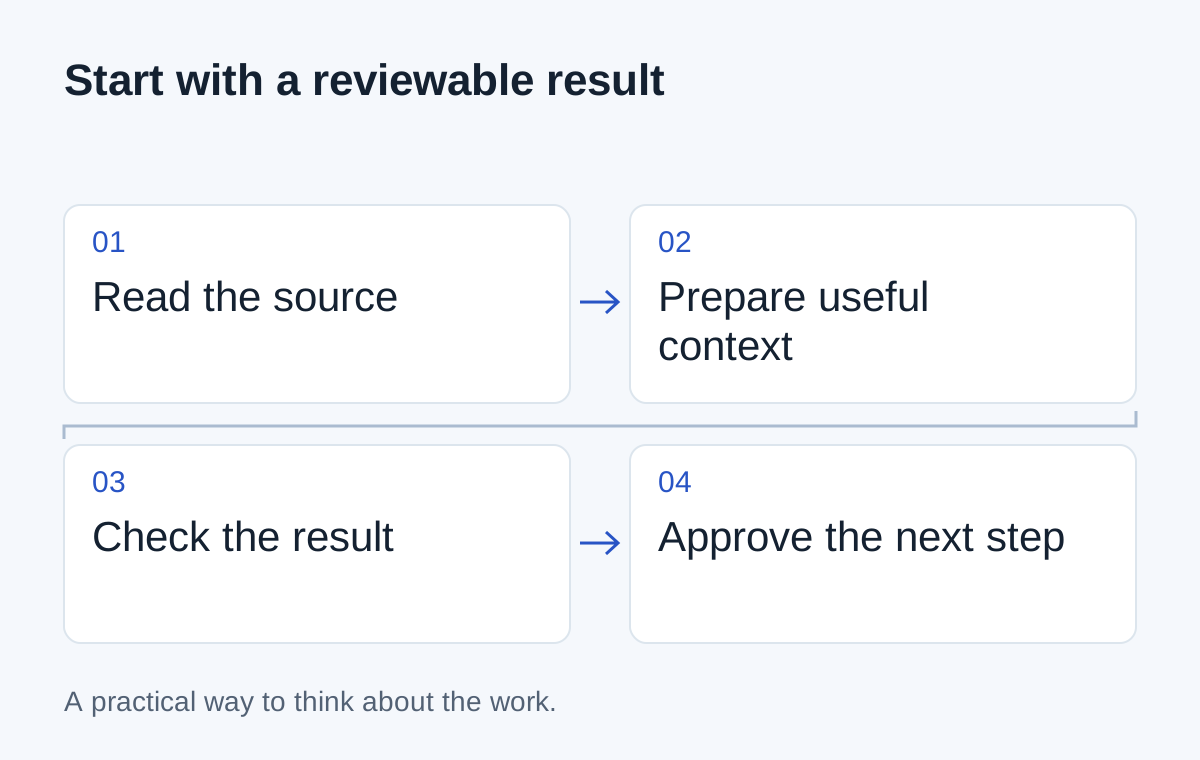
- 01Read an approved source
- 02Prepare an answer or draft
- 03Check against the record
- 04Let a person decide
Use rules when rules are enough
If every accepted booking needs the same reminder two days beforehand, a scheduled rule may be simpler than AI. If a request must go to the account owner listed in the CRM, use that record.
AI becomes more relevant when the input varies: free-text messages, different document layouts or questions expressed in everyday language. It still needs boundaries around the decisions that follow.
| Task | Start by investigating |
|---|---|
| Send a reminder on a known date | A scheduled rule |
| Read a supplier's varied invoice format | Extraction with source review |
| Explain why an order is delayed | Approved records and an answer with references |
| Approve a refund outside policy | An authorised person's decision |
Choose a result that is easy to review
A draft customer update is easier to test than a system that independently promises a delivery date. You can compare the draft with the source and decide whether to send it.
Generative AI can produce confident but incorrect material; NIST discusses this risk in its Generative AI Profile. A small pilot should include incomplete records and questions the system cannot answer, not just examples that work well.
Take one repeated task and collect a representative set of inputs. Agree the expected output and the review step. If the trial reduces work after corrections are included, you have a reason to investigate the next task. If it doesn't, you've learned that before connecting it to a consequential action.
Next step
Have a similar situation in your business?
Tell us how the work happens today and where it gets difficult. We can help you work out a useful next step.
Talk through your situation