Buyer guide / Delivery partner
How to choose a software development partner: 12 questions to ask
A practical evaluation guide for business owners comparing software consultancies, development teams, and proposals for an important technology initiative.
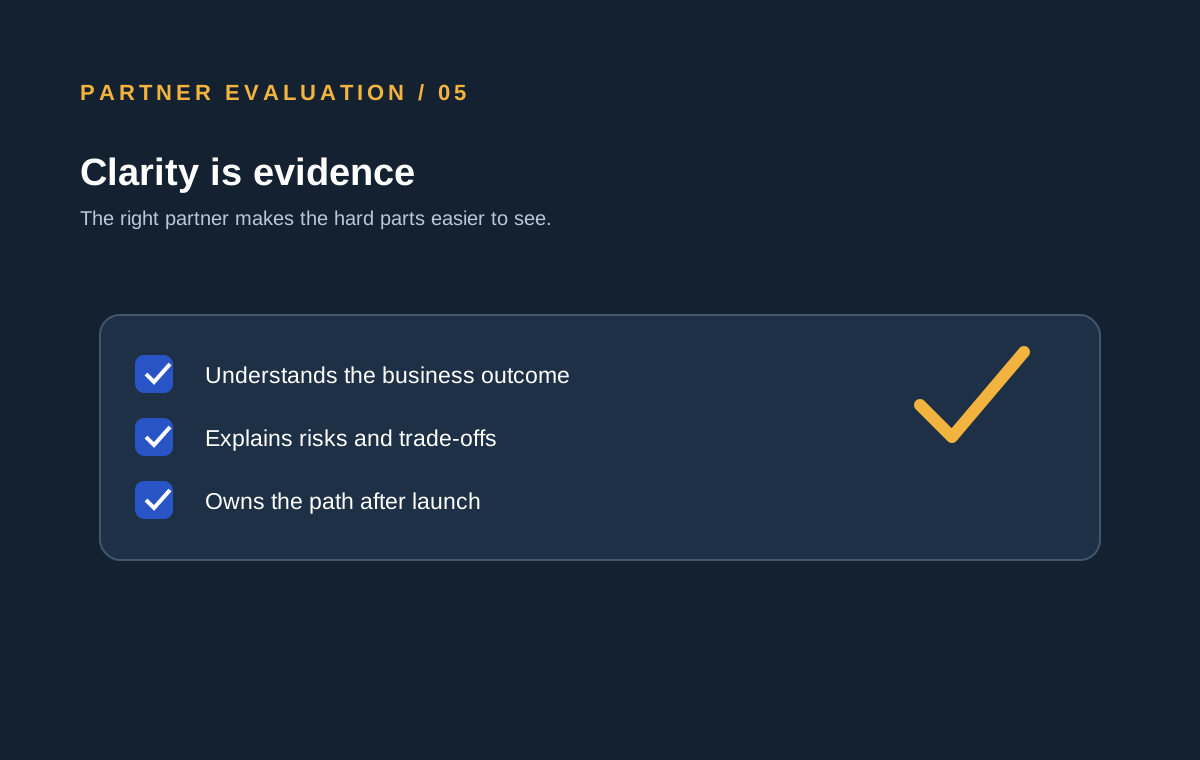
Choosing a software development partner is not only a technical hiring decision. It is a decision about how your business will make product, risk, and operational decisions for months or years.
A polished proposal can still hide weak discovery, unclear ownership, fragile architecture, or an uncomfortable handover. The goal of evaluation is not to find the team that promises the most. It is to find the team that makes the important unknowns visible and can help you make better decisions.
The short answer
Choose a partner that can explain your business problem clearly, show how the system will work, identify risks before delivery, communicate evidence regularly, and remain accountable after launch.
Technical skill matters. So do judgement, transparency, documentation, testing, security, and the ability to say “that is not the right thing to build yet.”
12 questions to ask
1. What do you think the real business problem is?
Ask the team to explain the problem in their own words. A good partner will connect the software request to the workflow, customer, operational, or financial outcome behind it.
2. What would you need to understand before estimating?
The answer should include users, workflows, data, integrations, constraints, risks, and the definition of a useful first release. An instant precise estimate from a vague brief is a warning sign.
3. What would you recommend not building?
This tests judgement. A capable partner should be able to remove unnecessary scope, recommend an existing product, or suggest a hybrid approach when that is better for the business.
4. How will you decide what comes first?
Look for a prioritization method based on business value, risk, learning, dependencies, and operational readiness—not only a list of requested features.
5. How will the architecture handle change?
You do not need a lecture full of diagrams. You do need to understand where the important system boundaries are, how data moves, and what can change without putting the entire platform at risk.
6. How will integrations and failures be handled?
Ask what happens when an API is unavailable, a message is duplicated, a payment succeeds but a downstream action fails, or two systems disagree. The answer reveals whether the team is designing for production or only for a demo.
7. What does testing include?
Testing should reflect the real risk: workflow rules, permissions, integrations, data, performance, accessibility, and recovery. “We test as we go” is not enough unless the process is explained.
8. How will we see progress?
You should know what is being built, what decisions are blocked, what risks have changed, and what is ready to review. Regular visibility is part of delivery, not an optional reporting layer.
9. Who owns the code and documentation?
Clarify repository access, intellectual property, deployment access, infrastructure, credentials, documentation, and the process for handing work to another team.
10. What happens after launch?
Ask about monitoring, incident response, security updates, backups, maintenance, support, and future changes. A production system needs an operating model.
11. What risks do you see in this project?
Good partners do not pretend that risk is absent. They explain what is known, what is uncertain, what can be tested early, and how the plan protects the business.
12. Can you show relevant evidence?
Ask for examples of similar problems, not just similar industries or technology names. The useful evidence may include a case study, architecture explanation, delivery artefact, or reference conversation.
Warning signs in a proposal
Be careful when a proposal:
- Starts with a technology stack instead of the business outcome.
- Gives a confident fixed price without discussing assumptions.
- Treats integrations as a line item with no failure behaviour.
- Promises every feature in the first release.
- Has no clear testing, deployment, or support plan.
- Keeps code, infrastructure, or documentation inaccessible to you.
- Uses impressive client logos without explaining the actual work.
- Cannot explain technical decisions in language your business can use.
Score the proposal across five areas
| Area | What strong evidence looks like | | --- | --- | | Business understanding | They can describe the workflow and outcome clearly | | Technical judgement | They explain trade-offs and risks without hiding complexity | | Delivery visibility | You can see progress and make decisions throughout | | Ownership | Code, access, documentation, and responsibilities are explicit | | Long-term thinking | Operations, maintenance, security, and change are included |
The cheapest proposal may still be the most expensive if it leaves the business with an unstable system or no way to change it safely.
What a good first engagement can look like
You do not always need to commit to a full build immediately. A focused discovery or architecture engagement can produce:
- A shared understanding of the workflow.
- A system and integration map.
- A recommended first release.
- Known risks and open decisions.
- A delivery roadmap.
- A grounded estimate and ownership plan.
This gives both sides a chance to test collaboration before a larger commitment.
Final recommendation
Choose the partner who gives you more clarity after the conversation than you had before it. They should be technically deep enough to see the hidden complexity and practical enough to explain what matters, what can wait, and what the business needs to decide next.
SystemVale works with businesses that need direct technical thinking, clear delivery, and systems designed around real operational constraints.
Frequently asked questions
Should we choose a large agency or a small consultancy?
Size is less important than fit, accountability, relevant experience, and access to the people making technical decisions. Ask who will actually understand and deliver the work.
How many vendors should we compare?
Compare enough to understand different approaches, but do not turn selection into a feature-price contest. A small number of serious conversations usually produces better evidence.
Should the partner be in our industry?
Industry context helps, but strong systems thinking and the ability to learn your operation may matter more. Ask for evidence of similar workflows, complexity, integrations, or risk.
What should we prepare before speaking to a partner?
Bring the business problem, current workflow, systems involved, known pain points, users, constraints, and what success would look like. You do not need to arrive with a technical specification.
A useful next step
Good software decisions start with the workflow, not the feature list.
See how we workNext step
Choose your next software partner with more confidence.
Bring us the problem you are trying to solve. We will help clarify the technical risks, first steps, and delivery approach.
Start a technical conversation